

『Gravity Flow Fuel Meter: Low-Pressure Drop Mechanical Petroleum Gauges』Related information(clamp on meter|electromagnetic meter|venturi meterrotameter|orifice meter|ultrasonic flow meter|mass flow meter|coriolis mass flow meter|coriolis flow meter|magnetic flow meter|magmeter flow meter|magflow flow meter|mag meter flow meter|electromagnetic flow meter|vortex flow meter|turbine flow meter|thermal mass flow meter|thermal flow meter|rotameter flow meter)
Gravity Flow Fuel Meter: Low-Pressure Drop Mechanical Petroleum Gauges
Quick Answer: A gravity feed fuel line needs a mechanical positive displacement meter that does not eat the available pipe pressure. Silver Automation Instruments recommends an oval gear fuel meter for diesel, fuel oil, kerosene, and gasoline from DN15 to DN80. The typical pressure drop stays below 0.15 bar at rated flow, so the meter works with a gravity head as low as 2.5 meters.
Why Gravity Flow Needs a Low Pressure Drop Meter
A storage tank 3 m above a burner or engine creates about 0.25 bar of static pressure at the meter inlet. Pipe elbows, filters, valves, and hose connections consume part of that head. A turbine meter can add too much resistance at low flow. A mechanical oval gear meter uses interlocking rotors that turn with a small differential pressure. This design keeps the line resistance low and gives stable readings.
On job sites in Indonesia, Vietnam, and Nigeria, we see gravity feed lines with only 2.5 m to 4 m of vertical drop. The fuel moves slowly. A meter that needs 0.3 bar or more will not register correctly. The burner or engine may starve. We specify a low pressure drop mechanical petroleum gauge for these conditions.
How a Mechanical Petroleum Gauge Works
A mechanical petroleum gauge uses oval gears inside a measuring chamber. Fuel enters the meter body. The gears rotate as fluid passes. Each rotation displaces a fixed volume. A gear train transfers the rotation to a mechanical counter. No power supply is required for the register.
Many units accept a pulse output or a 4-20 mA HART transmitter as an add on. The pulse or HART output gives remote reading without changing the meter internals. Use this option for PLC or fuel monitoring systems.
Recommended Models and Sizing
Silver Instruments supplies the OGM series oval gear flow meter for gravity feed and low pressure fuel service. Standard sizes are DN15, DN20, DN25, DN40, DN50, and DN80. Accuracy is plus or minus 0.5 percent of reading. Repeatability is plus or minus 0.1 percent. The standard body can be cast iron, cast steel, or stainless steel.
Choose a DN25 oval gear meter for flow rates from 20 L/h to 200 L/h on diesel. A DN40 covers 100 L/h to 1000 L/h. A DN50 covers 500 L/h to 6000 L/h. For heavy fuel oil above 200 cP, select one size larger to keep the pressure drop low.
Recommended pairings include the OGM-DN25 for a 20 kW to 150 kW diesel generator day tank, the OGM-DN40 for marine fuel
Installation Notes for Gravity Feed Systems
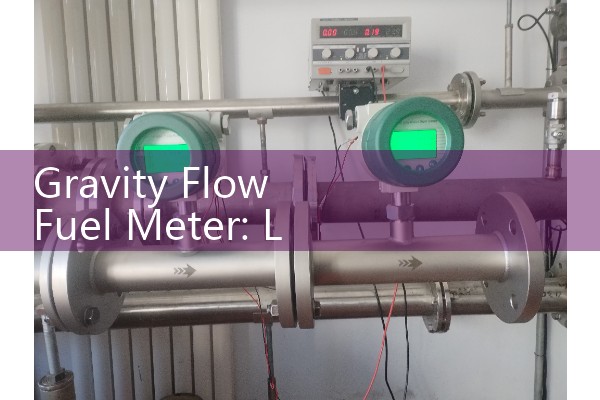
Install the meter at the lowest point in the fuel line. Place a Y strainer or basket filter 100 mm to 300 mm before the meter inlet. Solids above 50 microns can jam the oval gears. Use a check valve after the meter if backflow can occur. Keep the meter full of liquid. Air pockets cause counting errors. Vent valves help at high points.
Do not use a positive displacement fuel meter on dirty waste oil without a filter. The rotor clearances are tight. We have seen a site in the Philippines where sludge blocked a DN40 meter within two weeks. The customer added a 60 micron filter. The meter ran without maintenance for eight months.
Gravity Flow Fuel Meter FAQ
Q: What is the minimum gravity head for a mechanical fuel meter?
A: Silver Instruments recommends at least 2.5 m of vertical drop from the tank outlet to the meter inlet for diesel. For heavy fuel oil above 200 cP, use at least 4 m or install a small gear pump.
Q: Can this meter measure gasoline with gravity flow?
A: Yes. Select an aluminum or stainless steel body for clean fuel. The same oval gear design works with gasoline, kerosene, diesel, and light fuel oil. Check seal material for ethanol blends.
Q: Does the meter need a power supply?
A: No. The mechanical counter runs from the gear train. A pulse output or a 4-20 mA output is optional for remote monitoring or PLC connection.
Q: What is the typical pressure drop?
A: For diesel in a DN25 oval gear meter at 100 L/h, the pressure drop is usually below 0.1 bar. At maximum rated flow, it stays below 0.3 bar. Sizing the meter one size larger reduces the drop further.
Q: How often does the meter need calibration?
A: Many fuel depots and generator sites check calibration once every 12 months. The mechanical register rarely drifts. Wear from abrasive particles causes more error than time. Keep the fuel clean. Recalibrate after any rotor or seal replacement.
Get a Quote for a Gravity Flow Fuel Meter
Send us your fuel type, viscosity in cP, pipe size in DN, gravity head height in meters, and flow range in L/h or m³/h. Also tell us if you need a pulse output or a 4-20 mA HART signal. Contact Silver Instruments. Tel: +86-135-1213-1526. Whatsapp: 86-135-12131526. WeChat: +86 13512131526.
 Hot Blog
 Related AD