

『How Does a Peak Flow Meter Work: Tracking Asthma Symptoms Correctly』Related information(clamp on meter|electromagnetic meter|venturi meterrotameter|orifice meter|ultrasonic flow meter|mass flow meter|coriolis mass flow meter|coriolis flow meter|magnetic flow meter|magmeter flow meter|magflow flow meter|mag meter flow meter|electromagnetic flow meter|vortex flow meter|turbine flow meter|thermal mass flow meter|thermal flow meter|rotameter flow meter)
How Does a Peak Flow Meter Work: Tracking Asthma Symptoms Correctly
Quick Answer: A peak flow meter measures the maximum speed of exhaled air in liters per minute. Asthma patients use it at home to track lung function trends and detect early warning signs. For industrial calibration of these devices or for pharmaceutical production lines, a traceable gas flow reference such as a thermal mass flow meter from Silver Automation Instruments is the correct tool.
What a Peak Flow Meter Actually Measures
A peak flow meter is a simple mechanical device. It has a mouthpiece, a piston or vane, and a scale marked in liters per minute. The patient inhales fully, seals the mouthpiece with the lips, and blows out as hard and fast as possible. The moving piston pushes along a spring loaded track. The highest position reached during the forced expiration gives the peak expiratory flow rate, often shortened to PEF.
Most adults use a range from 60 L/min to 800 L/min. Children may use a smaller range from 30 L/min to 400 L/min. The device is not a diagnostic tool. It tracks changes over time. A patient records readings every morning and evening. They compare the results against a personal best value established over two to three weeks when symptoms are under control.
Green Yellow Red Zones in Asthma Tracking
Doctors set three zones for each patient. The green zone is 80 to 100 percent of the personal best. The yellow zone is 50 to 80 percent. The red zone is below 50 percent. These zones are not universal. They depend on age, height, and the condition of the patient.
Here is the thing. Many patients skip the diary. They take one reading and think the number alone tells the full story. In practice, the trend matters more than a single value. A reading of 450 L/min may be fine for one person and dangerous for another. The personal best comparison is the key.
Where Industrial Flow Instrumentation Comes In
Silver Automation Instruments does not sell home use peak flow meters for asthma patients. Those are regulated medical devices. But we do supply the flow measurement devices used to calibrate them and to test inhaler production lines.
Peak flow meter manufacturers and pharmaceutical companies need to verify that every unit leaves the factory within tolerance. They use a reference flow source. That source must be stable, repeatable, and traceable to a national standard. A thermal mass flow meter is a common choice for this job.
Why thermal mass flow. Because it measures gas mass flow directly. It does not need pressure and temperature compensation for clean dry air. A thermal mass flow meter can cover a range from 0.1 Nm3/h to 100 Nm3/h with an accuracy of plus or minus 1 percent of reading. That covers peak flow rates from about 1.7 L/min to 1667 L/min, which is wide enough for all clinical peak flow meters.
Recommended Flow Meter for Peak Flow Calibration Rigs
We recommend a thermal mass flow meter with a DN15 or DN25 process connection. Use 316L stainless steel wetted parts for clean air. Ask for 4-20 mA HART outpu
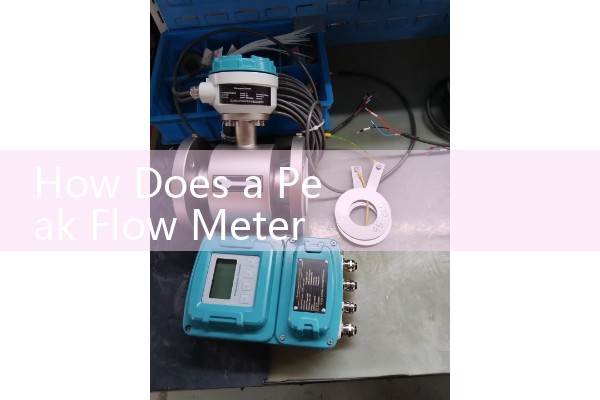
One medical device manufacturer in Southeast Asia tested peak flow meters from 60 L/min to 800 L/min. They needed a reference accuracy better than plus or minus 2 percent of reading. We supplied a thermal mass flow meter with 316L stainless steel body, 4-20 mA HART, and a calibration certificate for air. The customer mounted it on a test bench and logged readings through a PLC. That setup reduced their calibration time per unit from eight minutes to three minutes.
Flow Rate Conversion for Engineers
Peak flow meters display liters per minute at ambient conditions. Industrial flow meters often display standard or normal cubic meters per hour. Use this quick conversion for dry air at 20 degrees Celsius and 101.325 kPa. Divide L/min by 1000 and multiply by 60 to get Nm3/h. So 60 L/min is 3.6 Nm3/h. 800 L/min is 48 Nm3/h. 400 L/min is 24 Nm3/h.
If your test bench uses compressed air, check the supply pressure and temperature. A thermal mass flow meter is not affected by pressure and temperature changes when calibrated for the gas type. But you must specify the actual gas, not just air. If the gas contains moisture or oil vapor, install a filter and a dryer upstream. This protects the sensor and keeps the readings stable.
Silver Automation Instruments Contact
We supply thermal mass flow meters, Coriolis mass flow meters, electromagnetic flow meters, ultrasonic flow meters, vortex flow meters, oval gear flow meters, pressure transmitters, and paperless recorders. For fast pricing, send us your gas type, flow range in L/min or Nm3/h, pipe size DN, pressure in bar, temperature in degrees Celsius, and required accuracy. Tel: +86-25-68650347. Whatsapp: +86-25-52155837. WeChat: +86 15365082610.
FAQ
Can Silver Automation Instruments supply a peak flow meter for asthma patients?
No. Peak flow meters for home asthma monitoring are medical devices. We supply industrial gas flow meters for calibration and manufacturing.
Which industrial flow meter is best for calibrating a peak flow meter test bench?
A thermal mass flow meter is a good fit. It gives direct mass flow, fast response, and covers the 3.6 to 48 Nm3/h range used by most peak flow meters.
What accuracy do reference flow meters need for peak flow meter calibration?
Most calibration rigs need plus or minus 1 to 2 percent of reading. A thermal mass flow meter with plus or minus 1 percent of reading and a traceable calibration certificate meets this.
Do you supply flow meters for pharmaceutical or medical device production?
Yes. We supply thermal mass flow meters, Coriolis mass flow meters, and ultrasonic flow meters for clean gas and liquid applications in pharmaceutical plants.
What output signal do you recommend for automated calibration systems?
Use 4-20 mA HART or Modbus RTU. Both connect easily to PLC and data loggers for automated batch records.
 Hot Blog
 Related AD