

『Electromagnetic Blood Flow Meter in Medical Tech: Principles and Design』Related information(clamp on meter|electromagnetic meter|venturi meterrotameter|orifice meter|ultrasonic flow meter|mass flow meter|coriolis mass flow meter|coriolis flow meter|magnetic flow meter|magmeter flow meter|magflow flow meter|mag meter flow meter|electromagnetic flow meter|vortex flow meter|turbine flow meter|thermal mass flow meter|thermal flow meter|rotameter flow meter)
Electromagnetic Blood Flow Meter in Medical Tech: Principles and Design
Quick Answer: Electromagnetic blood flow meters in medical tech use Faraday law to measure conductive blood flow. Industrial electromagnetic flow meters use the same principle for water, chemicals, wastewater, and food liquids. Silver Automation Instruments supplies inline electromagnetic flow meters from DN15 to DN3000 with 4-20 mA HART output and 0.5 percent standard accuracy.
How the Electromagnetic Flow Meter Principle Works
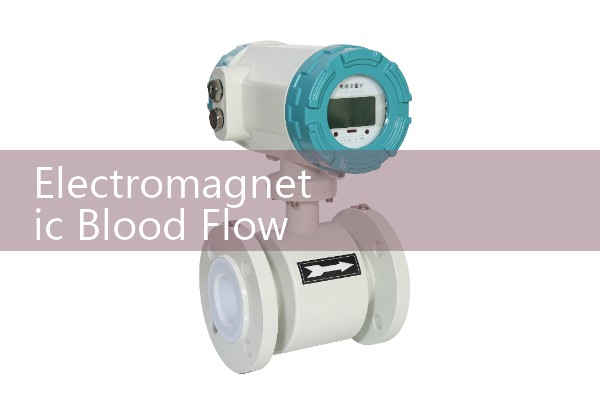
An electromagnetic flow meter applies a magnetic field perpendicular to flow. A conductive liquid moving through this field generates voltage across two electrodes. This voltage is proportional to average flow velocity. That is Faraday law. Medical blood flow probes miniaturize the magnet and electrodes around a vessel. Industrial magmeters place the same parts inside a flanged or wafer flow tube.
The signal equation is E equals k times B times V times D. E is induced voltage. B is magnetic flux density. V is average velocity. D is electrode spacing. K is a calibration factor. Because the meter measures velocity, volumetric flow equals pipe area times average velocity. No moving parts or pressure drop elements are needed.
In practice, the liquid must have conductivity of 5 µS/cm or higher for standard industrial meters. Most water, wastewater, acid, caustic, and food fluids exceed this. Blood has conductivity around 7000 µS/cm, which is why medical versions work well.
Design of an Industrial Electromagnetic Flow Meter
Silver Automation Instruments builds electromagnetic flow meters with a welded metal flow tube, insulating liner, electrodes, excitation coils, and a transmitter. The transmitter converts the small electrode signal into a 4-20 mA HART signal, pulse output, or RS485 Modbus. Pulsed DC excitation reduces polarization and drift. Standard accuracy is 0.5 percent of reading above 0.3 m/s. Optional 0.2 percent calibration covers DN50 to DN300.
Most engineers skip this part, but liner material drives early field failures. PTFE handles aggressive acids and temperatures up to 120 °C. Polyurethane suits abrasive slurries. Hard rubber works for water and weak acids. Electrode materials include 316L, Hastelloy C, titanium, tantalum, and platinum. For seawater, choose titanium or Hastelloy C. For hypochlorite dosing, choose titanium. For food and beverage CIP fluids, choose 316L with sanitary tri-clamp ends.
Line sizes run from DN15 to DN3000. Flow velocity range is 0.1 m/s to 12 m/s. Process connections include ANSI 150 flanges, DIN PN16 flanges, JIS 10K flanges, and tri-clamp hygienic fittings. Transmitter options include integral mount, remote mount with 10 meter cable, and IP68 remote sensor for flooded pits.
Medical Tech Uses the Same Faraday Law
Medical electromagnetic blood flow meters are compact probes or catheter sensors. They measure blood flow in mL/min or L/min during surgery, research, or perfusion. The physical principle is identical to an industrial electromagnetic flow meter. The difference is packaging, sterilization, and signal conditioning. Medical probes are often sterilizable or disposable. Industrial meters use heavy duty liners, process flanges, and explosion proof housings for plant conditions.
Silver Automation Instruments does not supply implantable or clinical blood flow sensors. We supply industrial electromagnetic flow meters for water, wastewater, chemicals, food, beverage, and marine systems. If you need a sanitary flow meter for pharmaceutical water or clean conductive media, we can offer a tri-clamp model with PTFE liner and 316L electrodes.
Where These Meters Work in the Field
We
A desalination plant in Chile needed seawater flow measurement on high pressure brine lines. We supplied DN150 PTFE lined electromagnetic flow meters with titanium electrodes and ANSI 150 flanges. Pressure rating was 16 bar and temperature stayed below 40 °C. The site team liked the stable zero point and simple local display.
Electromagnetic flow meters do not work on non-conductive liquids. For diesel, lube oil, or pure water with conductivity below 5 µS/cm, use an oval gear flow meter or Coriolis mass flow meter instead. Ask us for a diesel flow meter option if your process includes fuel transfer.
Recommended Models and Material Selection
For most water and wastewater lines, we recommend the Silver Instruments EMF series electromagnetic flow meter with hard rubber or PTFE liner, 316L electrodes, integral transmitter, IP67 housing, and 4-20 mA HART output. For chemical dosing, use a PTFE liner and Hastelloy C electrodes. For seawater or desalination brine, use a polyurethane liner and titanium electrodes. For food and beverage use, choose a sanitary tri-clamp body with PTFE liner and 316L electrodes.
We also supply remote transmitters for hot or flooded installations. Remote mount is useful when the pipe runs in a pit or when ambient temperature exceeds 60 °C. Remote cable can be specified up to 30 meters. If you need explosion proof installation, we can provide Ex d for ATEX Zone 1 or Ex nA for Zone 2.
Request a Quote from Silver Automation Instruments
For a price quote, send us your fluid type, conductivity in µS/cm, pressure in bar, temperature in °C, pipe size DN, and flow range. Tell us if you need flanged, wafer, or tri-clamp connection. We will reply with model selection, lead time, and shipping cost to your site.
Contact Silver Automation Instruments: Tel +86-135-1213-1526, WhatsApp 86-135-12131526, WeChat +86 13512131526. Our website is flow-meter.com.au.
FAQ
Q1: Can your electromagnetic flow meter measure blood or medical fluids?
We supply industrial process meters, not clinical implantable sensors. For sanitary pharmaceutical water or clean conductive fluids, we can provide a tri-clamp model with PTFE liner and 316L electrodes.
Q2: What is the minimum conductivity for a standard electromagnetic flow meter?
Standard models need 5 µS/cm or higher. Many water, wastewater, acid, caustic, and food fluids exceed this. For low conductivity solvents or pure water, use a Coriolis mass flow meter.
Q3: What accuracy can I expect from a Silver Instruments electromagnetic flow meter?
Standard accuracy is 0.5 percent of reading for flow velocity above 0.3 m/s. Optional 0.2 percent calibration is possible for DN50 to DN300 lines.
Q4: What liner and electrode materials do you recommend for seawater?
For seawater or desalination brine, use a polyurethane or PTFE liner with titanium or Hastelloy C electrodes. We have supplied this combination for a desalination plant in Chile.
Q5: How do I get a price and model selection?
Send us your fluid type, conductivity in µS/cm, pressure in bar, temperature in °C, pipe size DN, and flow range. We reply within one business day.
 Hot Blog
 Related AD