

『How to Read a Gas Flow Meter: Commercial Utility Billing System Sizing Verification Rules』Related information(clamp on meter|electromagnetic meter|venturi meterrotameter|orifice meter|ultrasonic flow meter|mass flow meter|coriolis mass flow meter|coriolis flow meter|magnetic flow meter|magmeter flow meter|magflow flow meter|mag meter flow meter|electromagnetic flow meter|vortex flow meter|turbine flow meter|thermal mass flow meter|thermal flow meter|rotameter flow meter)
How to Read a Gas Flow Meter: Commercial Utility Billing System Sizing Verification Rules
Quick Answer: For commercial utility billing, read the totalized flow value, not the instant flow rate. Verify gas flow meter sizing based on actual minimum and maximum flow, pressure, temperature, and pipe ID. Send Silver Instruments your pressure (bar), temperature (°C), pipe size (DN), and flow range for a sizing check.
What to Read on a Gas Flow Meter for Utility Billing
Commercial utility billing systems do not care about a single instant reading. They care about the total flow over a billing period. Most flow meters display two values. Instant flow shows the current rate in kg/h or Nm3/h. Totalized flow shows the accumulated volume or mass since the last reset. The billing system reads the totalizer register through a pulse output, 4-20 mA HART, or RS485 Modbus RTU.
Here is the thing. Many engineers check the instant flow on the local display and assume the billing system matches it. That is a mistake. A pulse output counts total flow. A 4-20 mA signal often represents instant flow. You must confirm which signal goes to the utility billing system. A wrong signal mapping can cause a 20 percent billing error in a month. We have seen this on customer sites many times.
Sizing Verification Rules for Commercial Gas Metering
Gas flow meter sizing starts with actual flow range, not pipe size. A DN50 pipe does not mean a DN50 flow meter. If the gas flow is only 8 kg/h at minimum, a DN50 vortex flow meter will not read it. You need a smaller meter or a bypass line. The first rule is to keep the maximum flow below 80 percent of the meter full scale. The second rule is to keep the minimum flow above 5 percent of the meter full scale. For thermal mass flow meters, the minimum can be lower, but you must check the velocity range.
Pressure and temperature change gas density. If you bill in Nm3/h or kg/h, the flow meter must compensate for pressure and temperature. A vortex flow meter with integrated pressure and temperature sensors can output compensated mass flow. A thermal mass flow meter outputs mass flow directly without a separate pressure sensor. For commercial billing, always ask for compensated flow. Uncompensated reading is fine for process control but bad for money. We saw a paint manufacturer in Southeast Asia lose 9 percent of billed gas volume because they used an uncompensated vortex meter on a biogas line. After we installed a compensated vortex meter with a 4-20 mA HART output, the monthly invoice matched the plant mass balance.
Most engineers skip this part. They take the flow range from a pump nameplate or a boiler datasheet. Those numbers are often maximum design values, not actual operating values. A flow meter sized for maximum design flow may not read low flows on weekends or during turndown. For commercial billing, you need actual flow data over at least 7 days. A data logger or a simple clamp-on meter can capture the profile. Silver Instruments asks for minimum flow, normal flow, and maximum flow. Three numbers are enough for a first sizing pass.
Common Gas Flow Meter Reading Errors
One common error is reading the display with the wrong engineering unit. A flow meter can display Nm3/h, m3/h, kg/h, or lb/h. If the billing system expects Nm3/h and the meter sends m3/h, the invoice is wrong. Check the unit code on the display and in the Modbus map.
Another error is ignoring zero flow drift. A vortex flow meter at zero flow should show a near zero output. If the 4-20 mA output is 4.1 mA instead of 4.0 mA, the billing system adds a constant offset. Over 30 days, that offset becomes real money. Calibrate the zero point with the pipe blocked or the gas line isolated. Do this during installation and after any shutdown.
A third error is installing the flow meter too close to an elbow or valve. Gas flow needs straight pipe to form a stable profile. For a vortex flow meter, you need 15 DN upstream and 5 DN downstream. For
Recommended Flow Meters for Gas Utility Billing
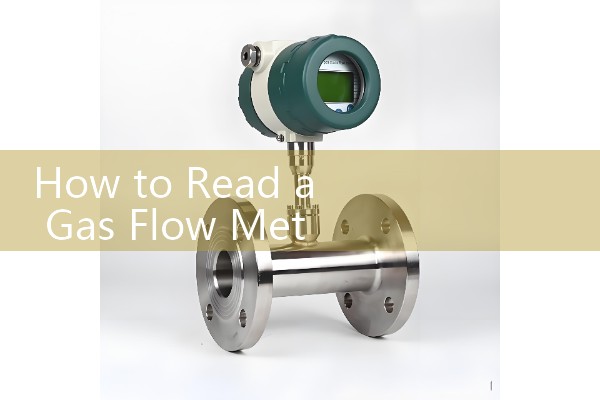
Silver Instruments offers three types for commercial gas billing. Vortex flow meters work well for dry gas and steam. They have no moving parts and handle high temperatures. A 4-20 mA HART output with pressure and temperature compensation is a standard option. Thermal mass flow meters work well for low flow gas, biogas, and mixed gas. They output mass flow directly and have a wide turndown ratio of 100:1. Coriolis mass flow meters give the highest accuracy around 0.2 percent of rate, but they cost more. For most utility billing applications, a vortex or thermal mass meter is enough.
For example, a gas flow meter on a 3 inch line in a water treatment plant can be a DN50 vortex meter with a flow range of 20 to 200 Nm3/h. If the gas is a mixed fuel gas from a digester, a thermal mass flow meter on a DN40 insertion probe may be the better choice. Silver Instruments can check this for you.
Data Integration with Utility Billing Systems
Utility billing systems read total flow from a pulse output, a 4-20 mA loop, or a Modbus register. The most robust for billing is a pulse output because each pulse represents a fixed volume or mass. The billing system counts pulses and multiplies by the pulse factor. No analog drift and no data scaling errors. If you use 4-20 mA, make sure the billing system maps 4 mA to zero flow and 20 mA to the correct full scale. One wrong scaling parameter can shift the invoice by 10 percent.
Modbus RTU over RS485 is also common. The billing system reads register 40001 for totalized flow and register 40003 for instant flow. The register map must be documented. Silver Instruments provides a standard Modbus map for all flow meters with RS485 output.
Contact Silver Instruments for a Sizing Check
Send us your pressure (bar), temperature (°C), pipe size (DN), and flow range. Tell us if the gas is natural gas, biogas, nitrogen, air, or steam. Include the billing system interface. Contact Silver Instruments at Tel: +86-25-68650347, Whatsapp: +86-25-52155837, WeChat: +86 15365082610. We will reply with a sizing sheet and a quote within 24 hours.
FAQ on Gas Flow Meter Reading and Sizing
Question: How do I read totalized gas flow from a flow meter?
Answer: Read the totalizer register on the local display or through Modbus. The billing system reads the same totalizer value, not the instant flow. Check the unit code before you record the number.
Question: What flow range should I use for sizing a gas flow meter?
Answer: Use the actual minimum, normal, and maximum flow over a typical billing period. Do not use the maximum design flow from a pump nameplate. If the maximum flow is 100 Nm3/h and the minimum is 6 Nm3/h, send both numbers to Silver Instruments.
Question: Does pipe diameter determine the gas flow meter size?
Answer: No. Pipe diameter is only one input. A DN50 pipe can carry a low flow that needs a DN25 flow meter. Always check the flow velocity and Reynolds number. Silver Instruments can calculate this from pressure, temperature, and flow range.
Question: Can a gas flow meter bill correctly without pressure and temperature compensation?
Answer: Only if the gas density is constant. For most utility gases, density changes with pressure and temperature. Use a compensated vortex flow meter or a thermal mass flow meter to avoid billing errors larger than 5 percent.
Question: What information should I send to get a quote for a gas flow meter?
Answer: Send the gas type, pressure in bar, temperature in °C, pipe size in DN, minimum and maximum flow in kg/h or Nm3/h, and the billing system interface. Contact Tel: +86-25-68650347, Whatsapp: +86-25-52155837, WeChat: +86 15365082610.
 Hot News
 Related AD