

『Letro Flow Meter Pool Setup: Troubleshooting In-Line Mechanical GPM Dials for Cleaners』Related information(clamp on meter|electromagnetic meter|venturi meterrotameter|orifice meter|ultrasonic flow meter|mass flow meter|coriolis mass flow meter|coriolis flow meter|magnetic flow meter|magmeter flow meter|magflow flow meter|mag meter flow meter|electromagnetic flow meter|vortex flow meter|turbine flow meter|thermal mass flow meter|thermal flow meter|rotameter flow meter)
Letro Flow Meter Pool Setup: Troubleshooting In-Line Mechanical GPM Dials for Cleaners
Quick Answer: A Letro-style inline mechanical GPM dial usually fails because of trapped air, debris on the impeller, wrong pipe size, or chemical scaling. Check the meter orientation and the pump suction side before replacing the dial. Silver Automation Instruments supplies replacement inline flow meters for water and wastewater lines and can match DN15 to DN50 connections with a GPM range that fits your cleaner.
Here is the thing: pool cleaner flow meters are simple but easy to misread. The dial sits in a bypass line or the main return line. It measures water moving through a small internal chamber. If that chamber is not full or the impeller cannot spin freely, the reading becomes useless.
Start With the Meter Position and Pipe Direction
Most mechanical GPM dials have an arrow on the body. Install the meter with the arrow pointing in the flow direction. On a pool cleaner line, the flow usually moves from the filter or pump toward the cleaner valve. A reversed meter may still show a small reading, but the needle will not track the actual flow.
Keep the dial face vertical or slightly upward. Avoid mounting the meter upside down because sediment can collect in the dial cavity. A horizontal pipe with the dial on top works best. If the pipe runs vertically, install the meter where the pipe is full and water flows upward. Downward vertical flow often leaves air pockets around the impeller.
Check Air Entry Before Touching the Dial
Air is the biggest hidden fault in pool flow measurement. A small leak on the pump suction side adds air to the water. The air compresses and expands through the meter, which makes the needle bounce. You will see a reading that moves from 3 GPM to 12 GPM within seconds. That is not a meter fault. That is a pump or pipe leak.
Bleed the filter air valve. Run the pump for two minutes. If the needle still jumps, tighten the pump lid seal and any union on the suction line. In practice, a 0.5 mm gap at a pump lid can pull enough air to ruin a GPM reading.
Clean the Impeller and Magnetic Drive
Pool water carries sand, sunscreen residue, algae, and small leaves. These materials wrap around the impeller shaft. The needle then reads low or sticks at one spot. Remove the meter from the line. Flush the chamber with clean water. Do not use a wire brush on plastic impellers. Use a soft toothbrush or soak the parts in mild acid if calcium scale is present.
Most engineers skip this part. They replace the meter before cleaning it. We have seen a pool service company in Australia replace three meters on one commercial pool skid. The real problem was fine sand packed into each dial body. A five minute flush fixed the original meter.
Match the GPM Dial Range to the Cleaner Flow
A meter with the wrong range will never read correctly. Small pressure-side pool cleaners often run at 5 to 12 GPM. Large commercial systems may run at 30 to 60 GPM. If you put a 0 to 60 GPM dial on a 6 GPM cleaner line, the needle barely moves. If you put a 0 to 10 GPM dial on a 40 GPM line, the needle pegs and the internals wear fast.
Select a range where the normal operating point sits between 30 percent and 70 percent of full scale. For a 20 GPM return line, a 0 to 30 GPM or 0 to 40 GPM dial works well. Oversized meters hurt accuracy and repeatability at low flow.
Pipe Size, Unions, and Straight Run
In-line mechanical meters need a stable flow profile. For DN25 pipe, keep at least 10 pipe diameters
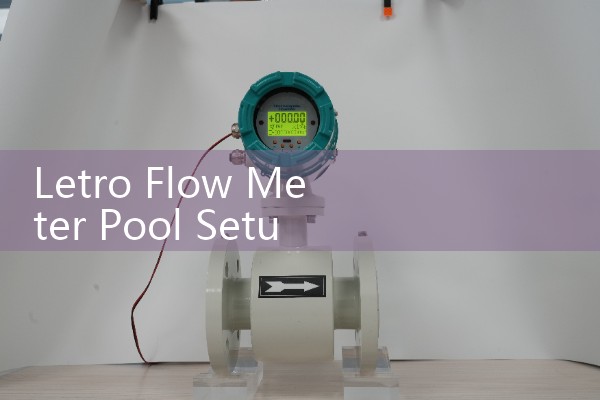
Use unions on both sides of the meter. Unions make cleaning faster and prevent you from twisting the pipe during installation. For PVC pool lines, use schedule 80 unions or true union meter bodies. Do not use thread tape pieces near the inlet because shreds can enter the impeller and jam it.
Chemical Attack and Material Selection
Pool water contains chlorine, acid, and sometimes salt. A low cost mechanical dial with nylon internals may survive in a residential pool. A commercial pool with chlorine dosing or salt chlorination needs a meter body in PVC, PP, or PVDF. Check the wetted parts. If the shaft is stainless steel, check the grade. 316L works in many pool water lines, but it can still pit in high chloride water over time.
Silver Instruments supplies industrial inline flow meters for water and wastewater applications. We have supported customers in Malaysia, Australia, Vietnam, and the Middle East with small DN15 to DN50 flow meters for dosing skids, backwash lines, and pool heat pump loops.
When to Replace the Meter Instead of Repairing It
Replace the meter if the dial face is cracked, the magnetic drive is worn, the shaft is wobbling, or the reading is not repeatable after cleaning. A worn magnet coupling can cause the needle to stick at the same GPM even when flow changes. This failure is common in older Letro-style dials that run continuously on commercial pool filtration systems.
For a replacement, send us the pipe size in DN, the connection type, the GPM range, and the pool water chemistry. Silver Automation Instruments can offer a mechanical inline meter or a magnetic flow meter with 4 to 20 mA HART output if you need remote monitoring or PLC integration. A magnetic flow meter has no moving parts and survives dirty pool water better than a small impeller design.
Frequently Asked Questions
Q: Why does my Letro flow meter dial bounce from 0 to 10 GPM?
A: Air is entering the pump suction or the meter is mounted in a partially filled pipe. Bleed the filter. Check pump lid seals and suction unions.
Q: Can I install an inline GPM dial on a vertical pipe?
A: Yes. Install it in an upward flow section with the pipe full. Downward vertical installation often traps air at the impeller.
Q: The needle moves but it reads lower than the pump curve. Is the meter bad?
A: Not always. Debris on the impeller, a partially plugged filter, or a closed valve can reduce actual flow. Clean the meter and check the system pressure before replacing it.
Q: What GPM range should I choose for a replacement meter?
A: Match the normal cleaner flow to 30 to 70 percent of the meter full scale. For most small pressure cleaners, a 0 to 20 GPM or 0 to 30 GPM dial is enough.
Q: Can Silver Automation Instruments supply a replacement inline flow meter for pool use?
A: Yes. Send your pipe size in DN, connection type, flow range in GPM, water temperature in °C, and chemical type. We will suggest a mechanical inline meter or a magnetic flow meter for the line.
Need a replacement flow meter for a Letro-style pool GPM dial? Send us your pipe size in DN, flow range in GPM, pressure in bar, and water temperature in °C. Tel: +86-25-68650347. WhatsApp: +86-25-52155837. WeChat: +86 15365082610. Website: flow-meter.com.au
 Hot Blog
 Related AD