

 Current position > Product detail
『Air Flow Meter Hood: Sourcing Commercial Ventilation Airflow Capture Kits』Related information(clamp on meter|electromagnetic meter|venturi meterrotameter|orifice meter|ultrasonic flow meter|mass flow meter|coriolis mass flow meter|coriolis flow meter|magnetic flow meter|magmeter flow meter|magflow flow meter|mag meter flow meter|electromagnetic flow meter|vortex flow meter|turbine flow meter|thermal mass flow meter|thermal flow meter|rotameter flow meter)
Air Flow Meter Hood: Sourcing Commercial Ventilation Airflow Capture Kits
Quick Answer: For commercial ventilation airflow capture kits, confirm the hood size, flow range in m³/h, accuracy class, and output signal before comparing suppliers. Silver Automation Instruments supplies thermal mass flow meters and differential pressure transmitters for these kits. Send us your duct size (DN), flow range, temperature, and required signal.
What a Commercial Ventilation Airflow Capture Kit Actually Measures
An air flow meter hood captures air from a diffuser or grille and directs the air across a sensor. The sensor reads air velocity and converts velocity to volumetric flow. Most commercial systems verify design airflow in offices, retail floors, hospital wards, and light industrial buildings.
Here is the thing. A hood alone does not give a measurement. The sensing element decides repeatability and drift. Silver Automation Instruments supplies the sensing part for contractors who build their own capture hoods or service existing kits.
In practice, you will see two main sensor types. A thermal mass sensor works well for low velocity air and wide turndown. A differential pressure sensor with a calibrated restriction works well for larger ducts and higher temperature air.
Key Specifications to Check Before You Buy
Ask for the flow range in m³/h or CFM. Commercial hoods often cover 40 to 4000 m³/h, but no single sensor covers the full span at high accuracy. A sensor rated for 0 to 1000 m³/h may read 2000 m³/h but the error can increase to 5 percent or more.
Check the accuracy at the low end, not just at full scale. Most engineers skip this part. A spec of ±2 percent of full scale can mean poor accuracy at 10 percent of range. Ask for a graph or a table of accuracy versus flow.
Temperature matters. Ventilation air in Saudi Arabia or northern Australia can reach 45 °C inside a ceiling plenum. A sensor rated for 0 to 50 °C may fail during a summer audit. Specify at least -20 to 60 °C for Middle East and Southeast Asia work.
Output signal is another common mistake. Building management systems usually accept 4 to 20 mA, 0 to 10 V, or Modbus RS485. Confirm the output before ordering. A 4 to 20 mA HART transmitter is easier to calibrate and troubleshoot in the field.
Do not overlook duct and hood size. A 200 mm hood with a 400 mm duct adapter creates a pressure drop that shifts calibration. Tell your supplier the exact dimension, not just DN or a rough size.
How Silver Automation Instruments Fits This Application
Silver Automation Instruments supplies thermal mass flow meters for air and gas measurement from 0.5 to 120 Nm³/h and larger insertion probes for ducts. For airflow capture kits, a thermal mass flow sensor with a 4 to 20 mA output gives direct flow data to a handheld display or a BMS.
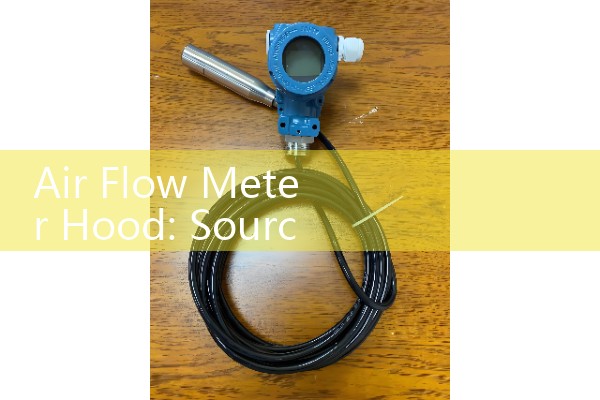
We also supply differential pressure transmitters with ranges of 0 to 2.5 kPa or 0 to 10 kPa. Differential pressure transmitters work with averaging pitot tubes in larger ventilation risers. Last year a customer in Vietnam asked us for a thermal mass flow meter to verify a kitchen exhaust riser. The duct was DN315. Flow ranged from 800 to 2200 m³/h. The customer needed 4 to 20 mA HART and a local display. We supplied the meter and a calibration report.
In many commercial projects, the flow data goes into a paperless recorder for compliance. We recommend a 24-channel paperless reco
Common Mistakes in Airflow Capture Kit Procurement
One mistake is buying the sensor and hood separately without a calibration match. A hood sensor calibrated in open air may shift by 3 to 5 percent when mounted in a plastic base. Ask the supplier if the calibration includes the full flow path.
Another mistake is ignoring altitude and humidity. A thermal mass flow sensor reads mass flow, so reported volumetric flow changes with air density. For high altitude sites in Mexico City or Bogota, specify local barometric pressure and let the supplier correct the conversion.
We have seen this problem on customer sites many times. A contractor orders a flow meter with a 24 V DC supply but the site panel only has 230 V AC. Check the power supply at the same time. Specify 24 V DC loop power or 85 to 265 V AC if the transmitter has an internal power module.
What We Recommend for Most Commercial Projects
For a standard office or retail ventilation audit, choose a thermal mass flow sensor with 0 to 3000 m³/h range, ±2 percent of reading accuracy, and 4 to 20 mA HART output. Make sure the sensor body fits a 200 to 400 mm hood adapter. The power supply should be 24 V DC.
For larger air handling units or industrial ventilation, choose a differential pressure transmitter with a 0 to 2.5 kPa range and an averaging pitot tube. This arrangement handles higher dust loading and wider ducts without a large hood. The transmitter should include a local LCD and Modbus RS485 if the site uses a PLC.
Tell us the following data when you send an inquiry. Duct size in DN. Flow range in m³/h. Air temperature range. Output signal. Power supply. Hood opening dimensions. Based on those points, we can recommend a meter or transmitter same day.
Contact Silver Automation Instruments. Tel: +86-135-1213-1526. Whatsapp: 86-135-12131526. WeChat: +86 13512131526.
FAQ: Air Flow Meter Hood and Airflow Capture Kits
What flow range do commercial ventilation air flow hoods usually cover?
Most commercial hoods cover 40 to 4000 m³/h. Small diffusers sit near 40 to 500 m³/h. Larger ceiling plenums and air handling unit outlets reach 2000 to 4000 m³/h. Confirm the lowest and highest flow you must verify before ordering.
Does Silver Automation Instruments sell a complete airflow capture hood?
We supply the flow sensing instruments that fit inside a hood or duct adapter. We do not make the plastic hood itself. We supply thermal mass flow meters, differential pressure transmitters, and paperless recorders for ventilation testing and BMS integration.
Which sensor type is better for a commercial ventilation hood?
A thermal mass flow sensor is better for low velocity air and wide turndown. A differential pressure transmitter is better for larger ducts and higher dust. We recommend thermal mass for most offices and retail sites.
How do I get a quote for a flow meter for an airflow capture kit?
Send us your duct size (DN), flow range in m³/h, air temperature range, output signal, and power supply. We will reply with a model and price. Use Tel: +86-135-1213-1526 or Whatsapp: 86-135-12131526.
Can the flow meter connect to a BMS or data logger?
Yes. Choose 4 to 20 mA HART, 0 to 10 V, or Modbus RS485. For multi-point audits, a paperless recorder logs data from several hoods at the same time.