

 Current position > News detail
『Air Flow Rate Meter: Sizing Inline Volumetric and Mass Industrial Piping Transducers』Related information(clamp on meter|electromagnetic meter|venturi meterrotameter|orifice meter|ultrasonic flow meter|mass flow meter|coriolis mass flow meter|coriolis flow meter|magnetic flow meter|magmeter flow meter|magflow flow meter|mag meter flow meter|electromagnetic flow meter|vortex flow meter|turbine flow meter|thermal mass flow meter|thermal flow meter|rotameter flow meter)
Sizing Inline Air Flow Rate Meters for Volumetric and Mass Industrial Piping Transducers
Quick Answer: For inline air flow measurement in industrial piping, pick a mass flow meter when pressure and temperature change often or when you need kg/h or Nm3/h readout. Pick a volumetric meter when line pressure is stable and you only need actual flow totalization. The right sizing starts from pipe diameter, minimum and maximum flow, pressure in bar, temperature in °C, and gas composition.
Silver Automation Instruments supplies inline air flow rate meters for compressed air, blower air, biogas, and combustion air lines. We work with plants in Southeast Asia, Oceania, Latin America, Africa, and the Middle East. The key difference is between volumetric flow and mass flow. Engineers do not always agree on which one to install. In practice, the line pressure and the flow turndown decide most applications.
Volumetric Air Flow Meters on Industrial Piping
Vortex flow meters are the common inline volumetric choice for compressed air systems above DN25. They handle pipe sizes from DN15 to DN200. They measure actual flow and output 4-20 mA HART. A typical installation is a compressed air header at 7 bar and 25 °C. The vortex meter reads m3/h at line conditions. If pressure moves from 6 bar to 8 bar, the mass flow changes but the volumetric reading does not compensate. For this reason, vortex meters fit stable pressure lines such as plant air headers, blower discharge lines, and nitrogen generation skids.
We have seen this on customer sites many times. A paint manufacturer in Southeast Asia installed a vortex air flow meter on a 50 mm compressed air line at 8 bar. The meter gave a repeatable m3/h total. The plant only needed to compare daily air use across two shifts. That was enough. They did not need mass flow. The unit cost was lower than a thermal mass meter, and the 4-20 mA signal connected directly to an existing PLC.
Mass Air Flow Meters for Varying Line Conditions
Thermal mass flow meters are the standard inline mass choice for air and gas. They measure flow by heat transfer and report mass flow in kg/h or standard volumetric flow in Nm3/h. They do not require separate temperature and pressure compensation. This is the main reason a biogas or combustion air line should use a mass meter. The gas density changes with temperature, pressure, and composition. The thermal dispersion sensor reads directly in mass units.
Coriolis mass flow meters can also measure gas mass flow, but the pipe size and pressure drop must be checked carefully. For low density air at atmospheric pressure, a Coriolis meter is often too large and too expensive compared with a thermal mass meter. Coriolis works better on fuel gas, high pressure natural gas, or gas dosing where accuracy is the priority. Ask Silver Instruments for a Coriolis sizing study if you need 0.2 percent mass flow accuracy on high pressure gas.
Sizing Data Required for an Inline Air Flow Meter Quote
We need five data points to recommend a transducer. First, the pipe size in DN. Second, the minimum and maximum air flow in m3/h or kg/h. Third, the operating pressure in bar. Fourth, the gas temperature in °C. Fifth, the gas composition and moisture level. For compressed air, dew point matters because wet air damages thermal sensors if condensation forms. For biogas, methane content and trace H2S matter.
Here is the thing. Most engineers skip the minimum flow. That is a mistake. A flow meter sized only for maximum flow may not read the low end. A vortex meter may drop below the cutoff. A thermal mass meter may lose accuracy below 0.5 m/s or 1 m/s depending on the probe design. Tell us your real minimum flow.
Recommended Inline Air Flow Meters by Application
For compressed air flow totalizing at 7 bar to 10 bar, use an inline vortex flow meter. Pipe sizes from DN15 to DN200, 4-20 mA HART output, and accuracy around 1.0 percent of reading. This suits plant air to production halls in Vietnam, food packaging lines in Australia, and water treatment aeration blowers in Mexico.
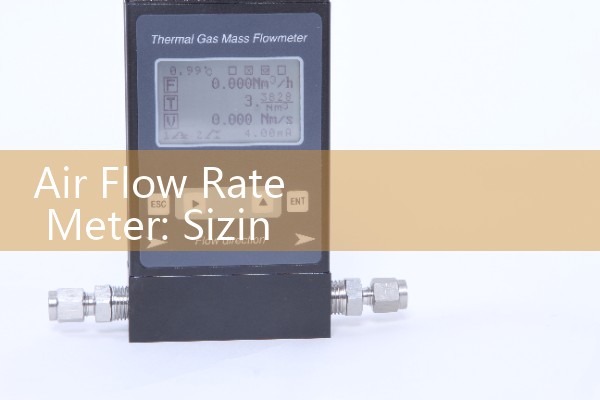
For combustion air, blower air, or biogas where mass flow matters, use a thermal mass flow meter. Select DN15 to DN80 for small lines or larger insertion types for big ducts. Typical accuracy is 1.0 percent to 1.5 percent of full scale. The output can be 4-20 mA HART or pulse. A wastewater plant in the Middle East measures aeration air in kg/h this way. The signal feeds a dissolved oxygen control loop.
For high pressure air, fuel gas, or gas injection, use a Coriolis mass flow meter. It works on small lines from DN3 to DN50 for gas. It gives direct mass flow and density. The accuracy is high but the pressure drop must be reviewed. We have sized Coriolis gas meters for oil and gas skids in Argentina and chemical dosing systems in Thailand.
Inline Transducer Outputs and Approvals
Most Silver Instruments air flow meters use 4-20 mA HART output. Pulse output is available on vortex and some thermal mass models. Digital outputs like RS485 Modbus are common for remote sites. For hazardous areas, request ATEX Zone 1 or Zone 2 approval. The electronics housing and the sensor can be supplied in 316L stainless steel. The process connection can be wafer, flange, or threaded. The meter must match the pipe schedule and flow direction. Always install the meter with the upstream and downstream straight run specified in the manual.
Flow conditioning matters. A compressed air meter after an elbow or valve may read unstable flow. Follow the straight run requirements in the manual.
FAQ
What is the difference between volumetric and mass air flow meters?
A volumetric meter reads actual m3/h at line conditions. A mass meter reads kg/h or Nm3/h. Mass meters compensate for pressure and temperature. Use mass when density changes or when you need standard flow.
Which flow meter is best for compressed air lines?
For stable pressure compressed air from 7 bar to 10 bar, a vortex flow meter is a good inline volumetric choice. For wide turndown or varying pressure, a thermal mass flow meter is better because it reads mass directly.
Can you install an air flow meter on a small DN15 pipe?
Yes. Thermal mass flow meters and some Coriolis models work on DN15 air lines. The flow range must be checked against velocity. Low flow lines below 1 m/s may need a smaller flow body or a different sensor.
Do air flow meters need temperature and pressure compensation?
Volumetric meters often do. If you need mass or standard volume, add a PT100 temperature sensor and a pressure transmitter or buy a thermal mass meter with built in mass calculation. Thermal mass meters do not need external compensation for many dry air and gas applications.
How do I get a price for an inline air flow meter?
Send us your pressure in bar, temperature in °C, pipe size in DN, and flow range in kg/h or m3/h. Tell us the gas composition and hazardous area class. We will return a model recommendation, accuracy statement, and price quote.
Contact Silver Automation Instruments. Tel: +86-25-68650347. WhatsApp: +86-25-52155837. WeChat: +86 15365082610. We serve industrial end users and distributors in Southeast Asia, Oceania, Latin America, Africa, and the Middle East.