

 Current position > News detail
『The function of electromagnetic flowmeter』Related information(clamp on meter|electromagnetic meter|venturi meterrotameter|orifice meter|ultrasonic flow meter|mass flow meter|coriolis mass flow meter|coriolis flow meter|magnetic flow meter|magmeter flow meter|magflow flow meter|mag meter flow meter|electromagnetic flow meter|vortex flow meter|turbine flow meter|thermal mass flow meter|thermal flow meter|rotameter flow meter)

1. Doppler open channel flowmeter
2. What are the measurement ranges of electromagnetic flowmeters?
1、 Electromagnetic flowmeter is a very sensitive flowmeter that can measure the flow rate of conductive liquids. It is also economical and has a diameter of generally DN10-- DN2000. It can measure sewage or corrosive liquids and has a wide range of applications;
2、 Electromagnetic flow meters can only measure volumetric flow rates, with units such as m3/h (cubic meters/hour), L/min (liters/minute), etc. They have pure grinding instantaneous flow rate display and cumulative flow rate display;
3、 The measurement range corresponding to electromagnetic flow meters of different diameters is: (unit: m3/h): DN10:0.03-4.24; DN15:0.06---9.54; DN20:0.12---16.96; DN25:0.18---26.5; DN32:0.29---43.42; DN40:0.45---67.85; DN50:0.7---106; DN65
1.19---179; DN80
1.8---271; DN100:2.28---424; DN125:4.41---662.。。。。。 For more detailed information, please refer to the technical article on the website of Shandong Qiangsheng Automation Technology Co., Ltd.... Www.qszdh.com
3. Principle of Electromagnetic Flow Meter
The basic principle of electromagnetic flow meter is based on Faradays law of electromagnetic induction, and its core is to calculate the fluid volume flow rate by measuring the induced electromotive force generated by the motion of conductive fluid in a magnetic field. The specific principle is as follows:
1. The core function of Faradays law of electromagnetic induction is that when a conductor (such as a conductive fluid) cuts magnetic field lines in a vertical direction, an induced electromotive force proportional to the velocity and magnetic
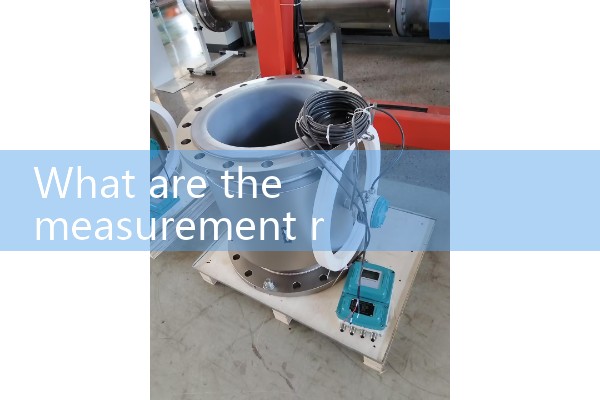
3. Induction of electromotive force and measurement of fluid cutting and cutting magnetic field lines: When a conductive fluid (such as water, acid-base solution) flows through the conduit at a speed of v, the charged particles (ions) in the fluid move perpendicular to the direction of the magnetic field, forming a cutting motion of magnetic field lines.
. Electrode signal acquisition: Fluid motion causes a potential difference (induced electromotive force E) between the two electrodes, which is proportional to the fluid flow velocity v. Flow calculation: By measuring the electromotive force E, combined with the known magnetic field strength B and electrode spacing L, the average flow velocity v of the fluid can be deduced. The formula for calculating the volumetric flow rate Q is: Q=A × v=(π D2/4) × vA: cross-sectional area of the conduit D: inner diameter of the conduit 4. Key design points: the magnetic field is perpe